Tummy Tuck or Liposuction? Same Area, Different Procedures

People arrive having already chosen, and they have usually chosen liposuction.
The reasoning is understandable. It is the smaller operation, the cheaper one, the one with a few millimetre scars instead of a line running hip to hip, and the one you recover from in days rather than weeks. Given a choice between the two, almost anyone would pick it.
But it is not a choice in the way patients imagine. These two operations are not stronger and weaker versions of the same thing. They treat different tissues, and the question is not which you would prefer. It is which layer of your abdomen is actually causing the problem.
Three Layers, Three Different Answers
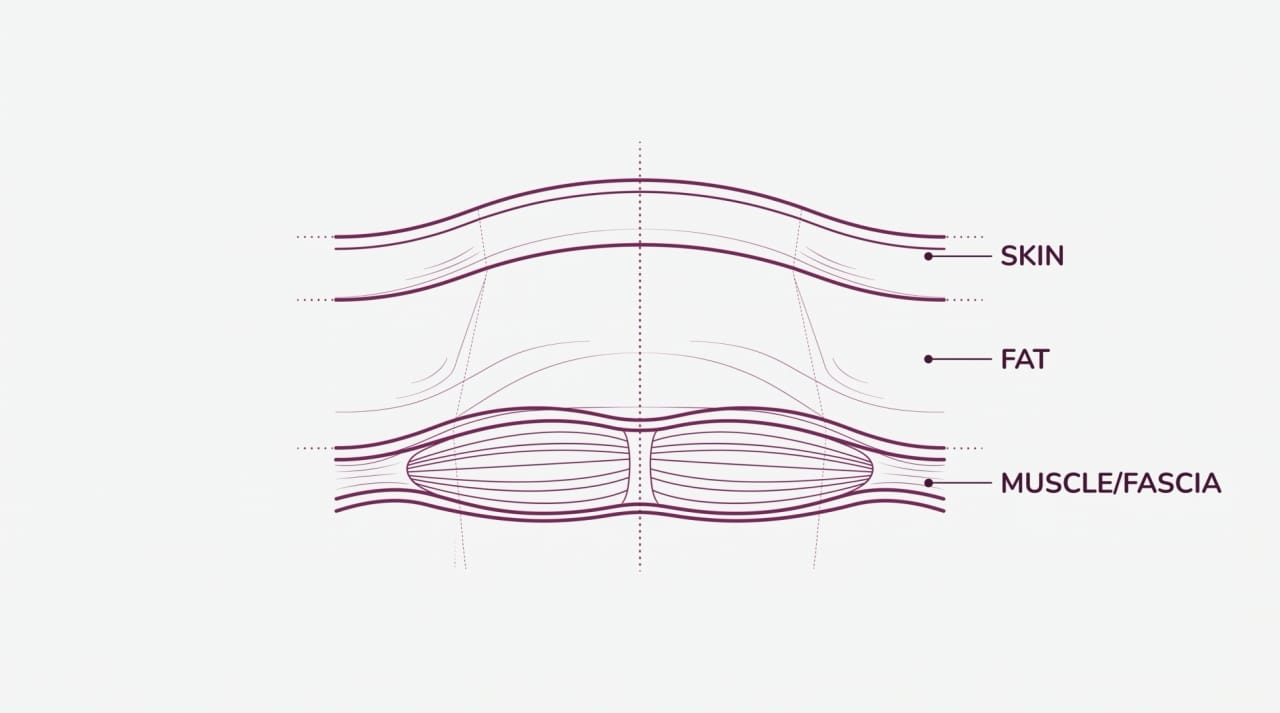
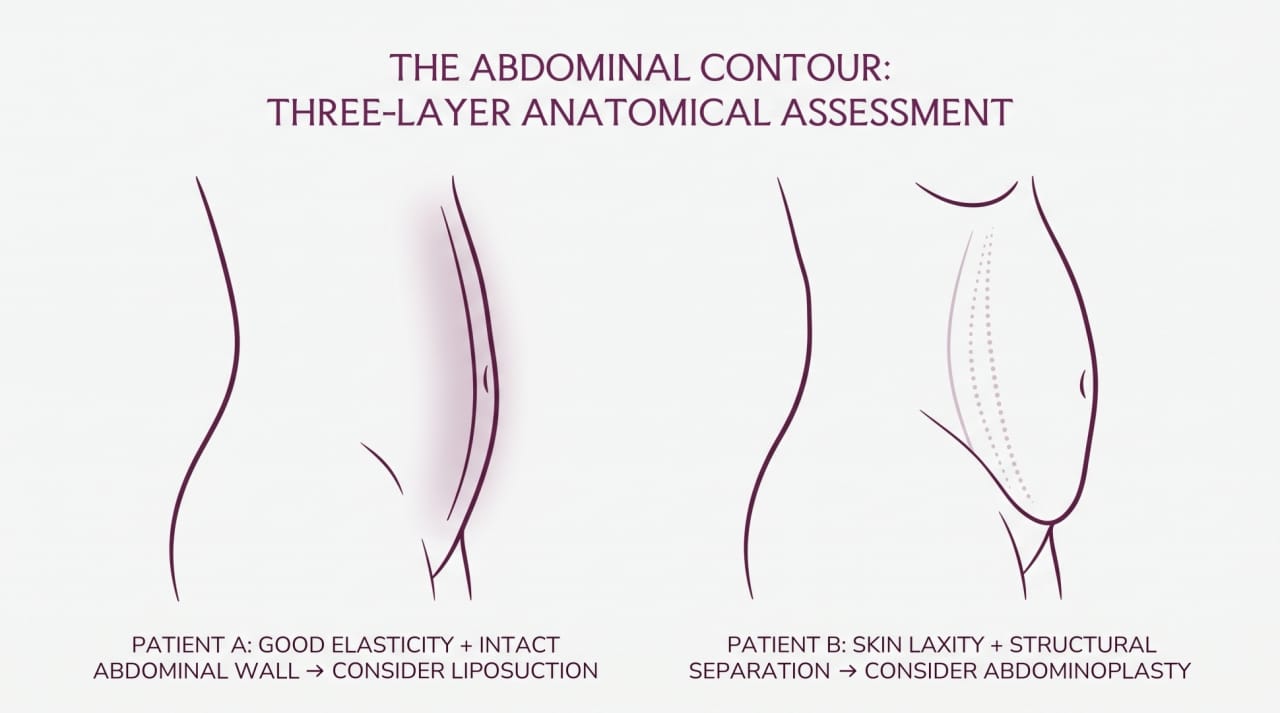
The abdomen you see in the mirror is made of several distinct layers, and each one can be the source of what is bothering you. Only one of them responds to liposuction.
Fat, between the skin and the muscle
This is subcutaneous fat, and it is the layer liposuction removes. It is the fat you can pinch between your fingers. When it sits in localised deposits that have not responded to diet and exercise, and the overlying skin is elastic enough to retract once it is gone, liposuction is an excellent and highly predictable operation.
Muscle, the abdominal wall itself
Pregnancy separates the two vertical columns of abdominal muscle at the midline, a condition called diastasis recti. The wall loses its central anchor and the contents behind it push forward, producing a lower abdominal bulge that persists at any body weight and in any state of fitness.
Liposuction cannot touch this. There is no fat to remove, and the cannula works in a layer above the problem. Repairing the separation means suturing the muscle layers back to the midline, which requires open surgical access. That is an abdominoplasty.
Skin, the envelope over everything
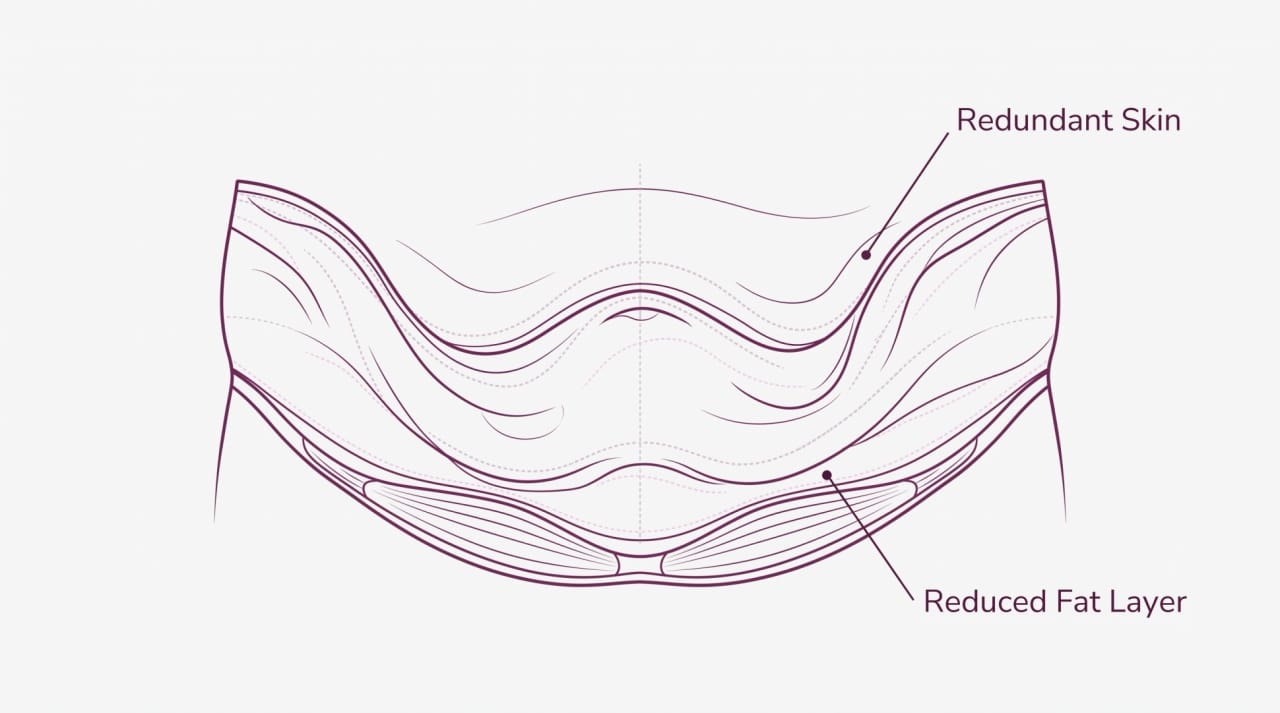
Skin stretched over months, by pregnancy or by substantial weight change, does not always retract. Where the dermis has been damaged, which is what stretch marks represent, elastic recoil is permanently reduced.
Liposuction removes volume from beneath that skin. If the skin cannot contract into the space created, the result is a thinner abdomen with more visible looseness than before, because the fat was providing fill that held the envelope out. Excess skin is addressed by removing skin, and that too is an abdominoplasty.
And one layer neither operation reaches
Visceral fat sits deep to the abdominal muscles, surrounding the organs. It cannot be removed by liposuction and it is not addressed by a tummy tuck. It is metabolically active, it responds genuinely well to diet and exercise, and it is a health matter rather than a contouring one.
Two Tests You Can Do at Home
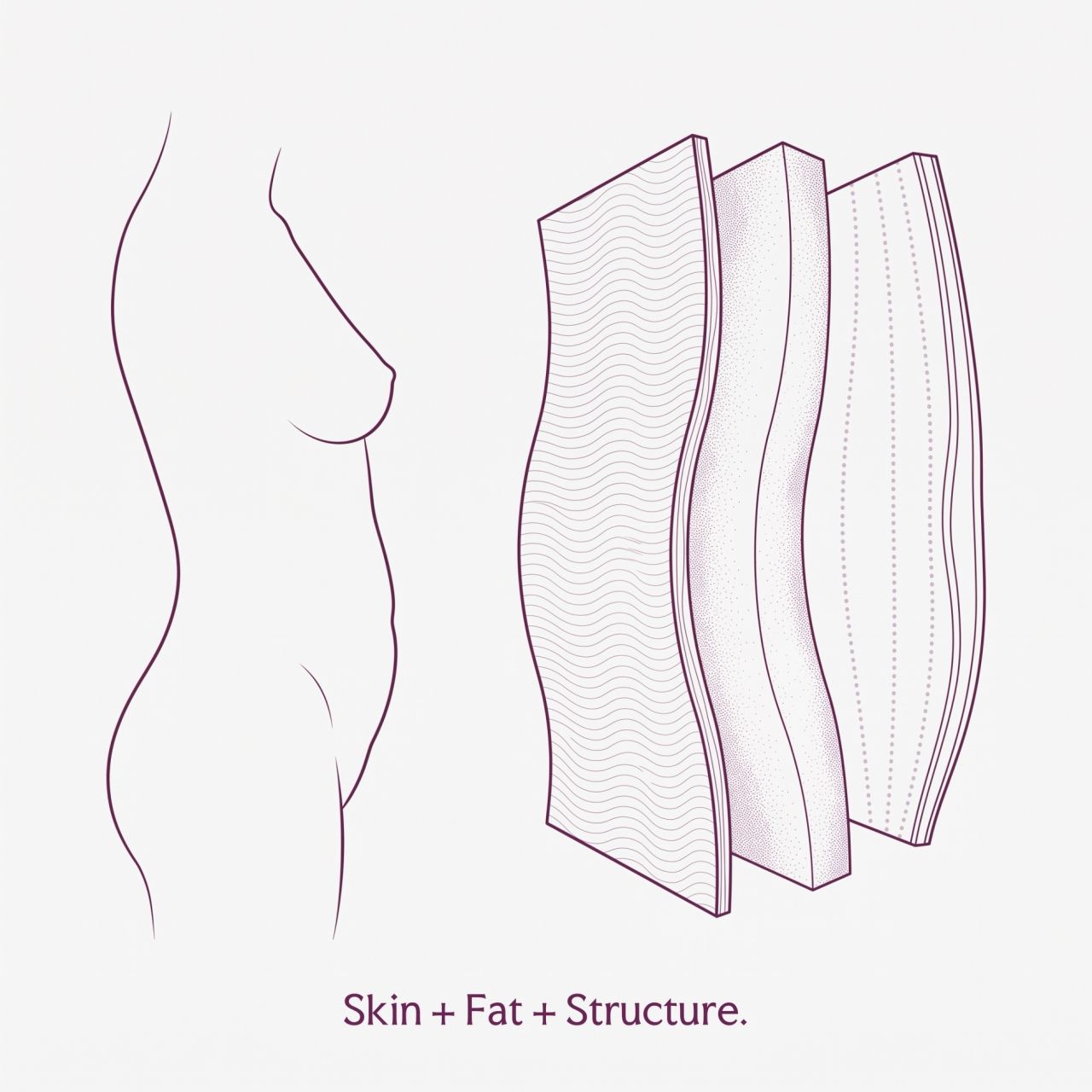
These will not replace an examination, but they will tell you a great deal about which conversation you are heading into.
The pinch test
Standing relaxed, pinch the tissue of your lower abdomen between thumb and fingers.
If you can grasp a thick, soft fold, that is subcutaneous fat and it is within reach of liposuction. Then release it and watch. If the skin springs back promptly, elasticity is good and retraction is likely. If it settles slowly or stays creased, retraction is less certain and skin may be the limiting factor.
If your abdomen is firm and you cannot grasp much at all despite it protruding, the volume is likely visceral. Neither operation will help, and that is worth knowing before you book a consultation rather than after.
The coning test
Lie on your back with your knees bent. Lift your head and shoulders slightly, as though beginning a crunch, and look down the midline of your abdomen.
If a narrow vertical ridge rises up along the centre, that is coning, and it indicates that pressure is escaping through a midline that cannot resist it. Place two or three fingers flat across the midline at the navel and press gently while lifting your head. If they sink into a soft gap between two firm ridges of muscle, you have a separation, and you can estimate its width in finger breadths.
A separation of two finger widths or more, more than a year after your last pregnancy, means liposuction alone will not give you the abdomen you are picturing.
Who Gets Which
Once the layers are established, the decision usually makes itself.
Liposuction alone suits a patient at or near a stable weight, with localised pinchable fat, good skin elasticity, no meaningful stretch mark damage, and an intact abdominal wall. This is often someone who has not had children, or who has and recovered well. The result in this group is reliably good and the recovery is short.
Abdominoplasty suits a patient with muscle separation, significant skin excess, or both. This is most commonly a woman a year or more past her last pregnancy, and it is also the common picture after substantial weight loss. No amount of liposuction will produce a good result here, and attempting it usually makes the looseness more obvious.
A combination of the two, where liposuction of the flanks and upper abdomen accompanies an abdominoplasty, is extremely common and is often the correct operation. The muscle repair and skin excision do the structural work while liposuction refines the contour at the sides so the waist reads properly. The two are not alternatives in this scenario. They are parts of one plan.
Neither operation is right for a patient whose abdomen is firm and non-pinchable, or whose weight is still moving substantially, or who intends to have another pregnancy.
What You Are Actually Comparing
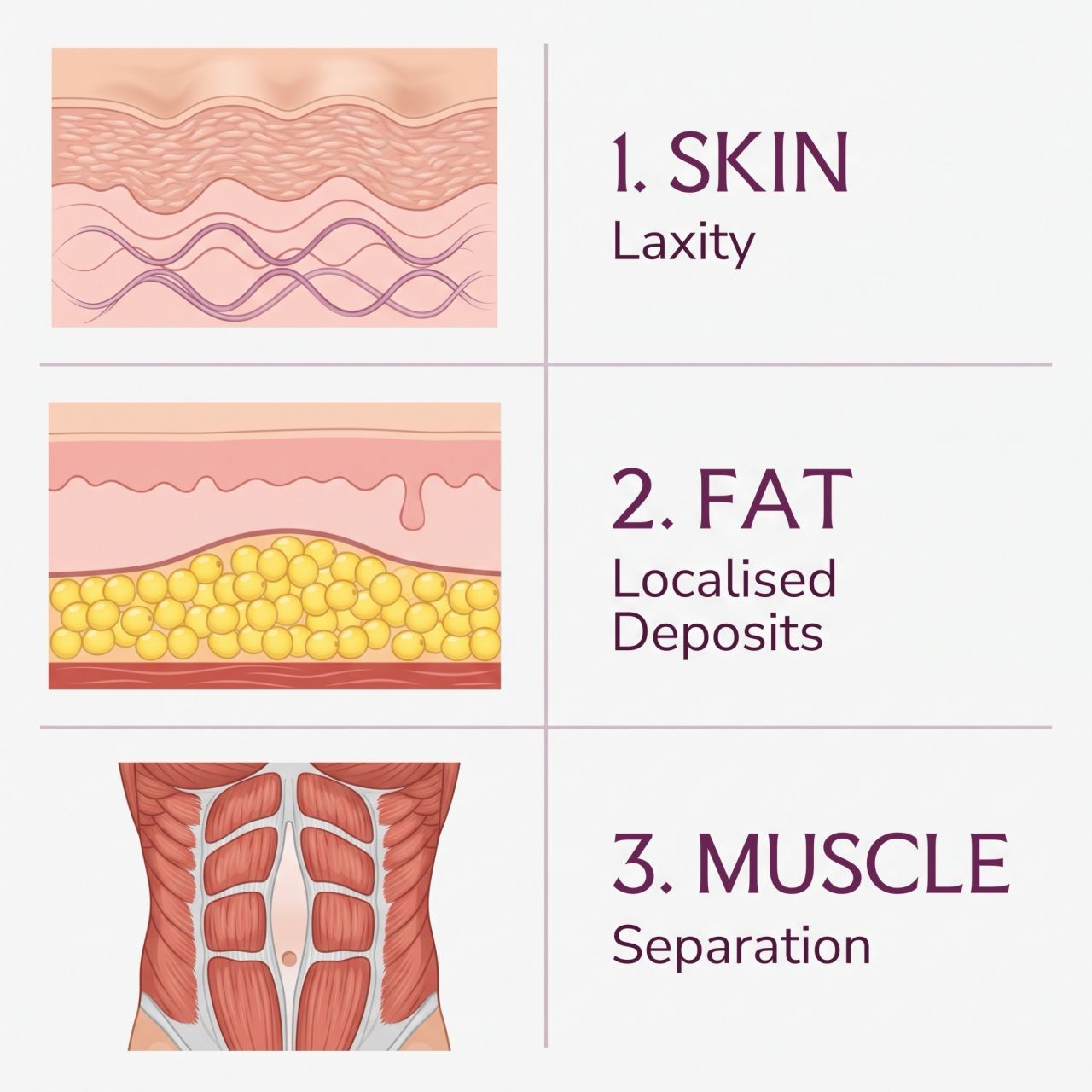
The practical differences are significant and worth setting out plainly, because they affect your life far more than the technical distinctions do.
Liposuction
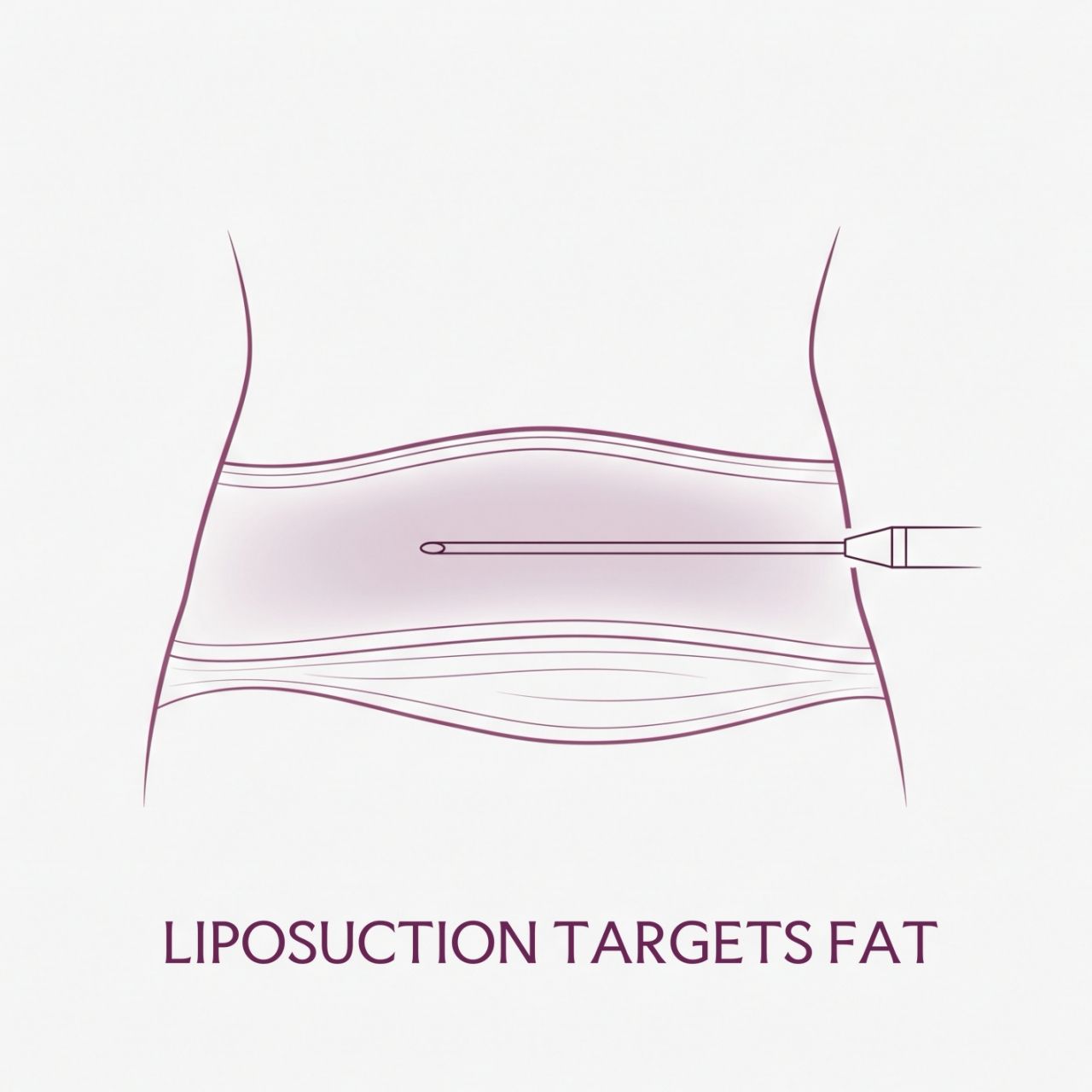
One to two hours in most cases. Frequently performed under sedation with tumescent local anaesthesia, sometimes general depending on volume and area. Day case. Scars are a few millimetres, placed in concealed sites. Desk work in a few days. Compression garment for four to six weeks. No drains in most cases. Final contour at three to six months.
Abdominoplasty
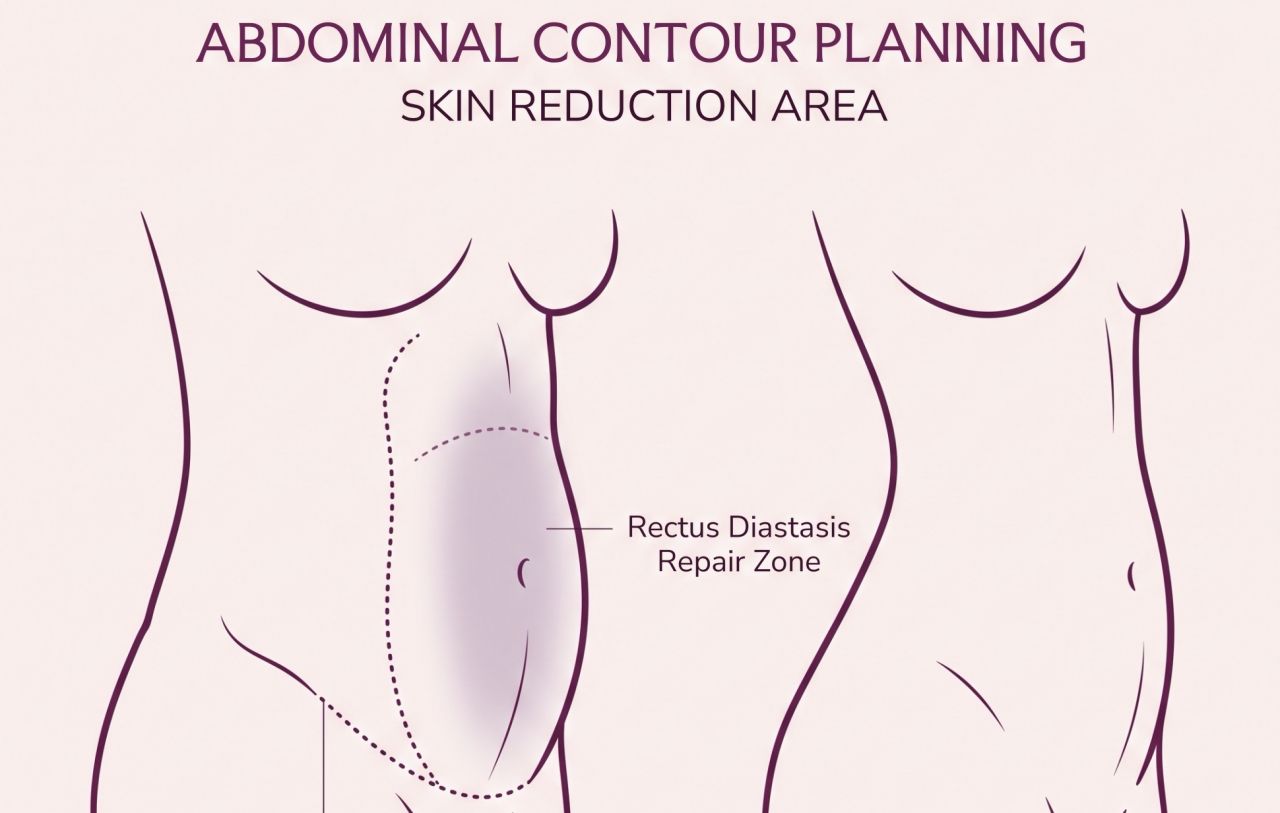
Two to four hours under general anaesthesia. Usually one night in hospital. Drains, generally removed within the first week. A scar running low across the lower abdomen from hip to hip, plus a small scar around the repositioned navel. Desk work at two to three weeks. No lifting beyond a few kilograms for six weeks. Compression for six weeks. Final contour at six to twelve months, scars maturing over twelve to eighteen.
The cost difference follows from this. An abdominoplasty involves longer theatre time, general anaesthesia, an overnight stay, and a more complex operation, and it is priced accordingly. In Delhi the gap between the two is substantial, and a quote that places them close together is worth questioning.
The Mistake I See Most Often
Liposuction performed on an abdomen that needed an abdominoplasty.
It happens for understandable reasons. The patient wants the smaller operation. The clinic is willing to provide it. Nobody examined the abdominal wall, because the examination that detects a separation takes two minutes and is easy to skip if the conversation has already moved on to price.
The result is predictable. Fat is removed, the patient is thinner, and the bulge remains, because the bulge was never fat. In patients with poor skin elasticity it can look worse, because the envelope that was being held out by fat now has nothing filling it.
And correcting it afterwards is harder than doing the right operation first, because liposuction creates scarring in the subcutaneous plane that an abdominoplasty must then work through.
The reverse error exists but is far less common. A patient with good skin, no separation, and localised fat occasionally gets offered an abdominoplasty when liposuction would have delivered a comparable result with a fraction of the recovery and no significant scar. If a tummy tuck is recommended to you, it is entirely reasonable to ask what your measured separation is and what your skin quality assessment showed.
The Questions That Settle It
Whichever clinic you consult in South Delhi, these four questions will tell you whether you have been assessed or merely quoted.
What is my measured abdominal wall separation, and at what levels? What is my skin elasticity like, and will it retract if volume is removed? How much of what I am seeing is subcutaneous fat and how much is visceral? And given those three answers, what result should I realistically expect from each of the two operations?
A surgeon who answers all four specifically, referring to your own examination rather than to generalities, has done the assessment. A recommendation that arrives before those questions have been answered is a recommendation about which operation the clinic prefers to sell, not about which one your abdomen needs.
Consultations in East of Kailash, South Delhi
We assess abdominal contour at our clinic in East of Kailash, a short distance from Kailash Colony metro on the Violet Line, and easily reached from Greater Kailash I and II, Defence Colony, Lajpat Nagar, CR Park, Kalkaji, Jangpura, Nehru Place, and Sarita Vihar.
If you have already been quoted for one of these operations elsewhere, bring the quote. Establishing which layer is actually causing the problem takes a few minutes, and it is worth doing before anyone operates on the wrong one.
Freyea Aesthetics
F-46, East of Kailash
New Delhi 110065, India
Dr. Ashutosh Misra, MCh (Plastic & Reconstructive Surgery), MS, MBBS
freyea.com