Liposuction in South Delhi: Which Areas Deliver, and Which Ones Disappoint
Look at almost any liposuction page from a Delhi clinic and you will find a list. Abdomen, flanks, thighs, arms, back, chin, calves. It is presented like a menu, as though selecting from it were a matter of preference and each item would arrive with the same reliability.
They do not behave alike. The gap between the areas that consistently produce excellent results and the areas that regularly disappoint is one of the widest in aesthetic surgery, and almost nobody explains it before a patient has paid.
The variable that separates them is not fat. Fat can be removed from anywhere. The variable is what happens to the skin afterwards.
The Thing That Actually Decides Your Result
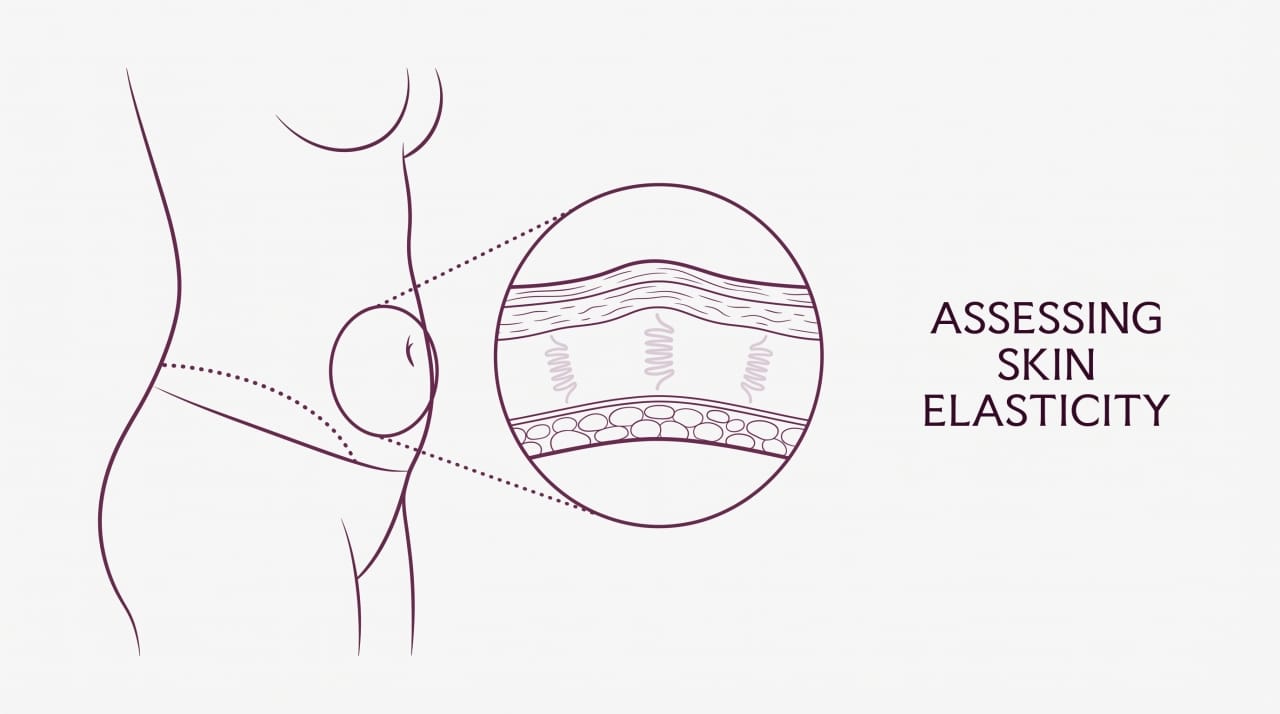
When fat is removed from beneath the skin, a space is created. The quality of your result depends almost entirely on whether the overlying skin contracts smoothly into that space or drapes loosely over it.
This is skin retraction, and it is governed by factors you do not control. Collagen and elastin content, which decline with age. Prior stretching, from pregnancy or significant weight fluctuation, which permanently alters the dermal architecture. Genetics. Smoking history. The inherent thickness of the skin in that particular region, which varies enormously across the body.
Skin over the flank is thick, well anchored, and retracts reliably. Skin over the inner thigh is thin, mobile, and retracts poorly. This single difference explains most of the variation in liposuction satisfaction, and it explains why two patients with identical volumes removed can have completely different experiences of the outcome.
So when I assess someone for liposuction, I spend more time examining skin than fat. I pinch, I release, I watch how quickly it returns. I look for striae, which indicate dermal damage that will not improve. I ask about weight history and pregnancies. The fat is the easy part of the assessment. The skin is the part that determines whether I should be operating at all.
The Areas That Consistently Deliver
Some regions are reliably satisfying, and they share the same characteristics: dense fibrous fat, thick well-anchored skin, and good retraction across a wide age range.
The flanks, what most patients call love handles, are the most consistently rewarding area I treat. The fat here is fibrous and localised, the skin is thick, and retraction is excellent even in patients in their forties and fifties. It is also an area that responds poorly to diet in most people, which means the contrast before and after is pronounced. Satisfaction is high and complications are rare.
The lower abdomen performs well within specific limits, which I will come to shortly. In a patient with good skin quality and no significant muscle separation, the improvement in silhouette is substantial.
The outer thighs, the saddlebag region, respond well. The fat is localised and genetically resistant, and the skin in that area is more robust than on the inner aspect.
The submental area beneath the chin is one of the most reliably satisfying zones on the body, partly because the platysma muscle underneath provides a supportive layer that assists retraction. I have written separately about why submental fat resists diet and exercise so stubbornly. For the right candidate, this is a small procedure with a disproportionately large effect on how the jawline reads.
The upper back and the bra roll region also perform well. The fat is fibrous, the skin is thick, and the improvement is visible in clothing almost immediately.
The Areas That Depend Entirely on You
These are the regions where I cannot give a general answer, because the outcome is determined by your individual skin rather than by the procedure.
The inner thighs are the clearest example. The skin here is thin and mobile, retraction is unpredictable, and the same operation that produces a clean result in a thirty year old with tight skin can produce visible looseness and contour irregularity in a fifty year old with a history of weight fluctuation. When the skin is good, the result is excellent. When it is not, removing fat can make the looseness more apparent rather than less, because the fat was providing volume that filled out the skin.
The arms behave similarly and are more emotionally loaded, because upper arm fullness is a common source of distress. In a patient under forty with elastic skin, arm liposuction can be transformative. In a patient over fifty, or in anyone who has lost significant weight, the limiting factor is skin, not fat, and liposuction alone may produce a thinner arm with more visible laxity. In those cases the honest recommendation is a brachioplasty, which addresses skin directly but leaves a scar along the inner arm, or no surgery at all.
This is a conversation I have often, and it is not a comfortable one. A patient who arrived wanting a straightforward procedure is being told that her options are a compromise result, a larger operation with a visible scar, or acceptance. But it is a far better conversation to have before surgery than after.
The Areas I Approach With Caution
Calves and ankles are technically possible and genuinely difficult. Swelling in the lower leg persists for months longer than elsewhere, the skin envelope is unforgiving of irregularity, and the margin between an improved contour and a visibly uneven one is narrow. I do treat this area, but selectively, and always with a frank discussion about the extended recovery.
The buttocks are an area where fat removal frequently produces an unwanted result. Reducing volume here tends to worsen sagging rather than improve shape, because projection is what holds the tissue up. Patients occasionally request it and I usually advise against it.
Large volume removal across multiple areas in a single session is where the safety conversation becomes serious. Fluid shifts, blood loss, and prolonged anaesthesia time all scale with volume, and beyond a certain point the risk profile changes materially. Staging across two sessions is often the safer plan, and a clinic that agrees to remove very large volumes in one sitting without discussing this is prioritising something other than your safety.
The Fat I Cannot Reach
This is the limitation that surprises patients most, and it is the reason some abdomens do not respond as expected.
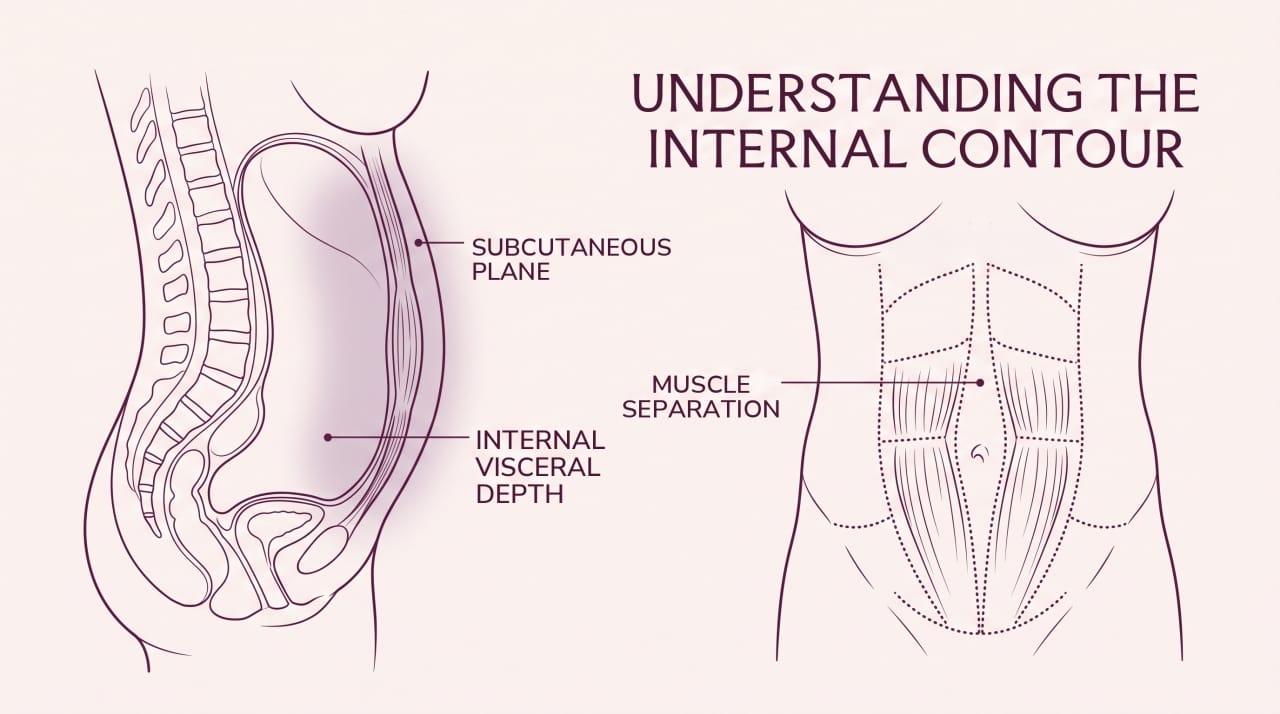
Abdominal fat exists in two compartments. Subcutaneous fat sits between the skin and the abdominal wall, and this is what liposuction removes. Visceral fat sits deep to the abdominal muscles, surrounding the organs. It cannot be removed by liposuction, and no cannula will ever reach it safely.
A firm, protruding abdomen that does not pinch easily is usually visceral. It is metabolically active, it responds well to diet and exercise, and it is a genuine health concern rather than a cosmetic one. Liposuction offers nothing for it.
There is a third factor that frequently goes undiagnosed. Diastasis recti, the separation of the vertical abdominal muscles, commonly follows pregnancy and produces a lower abdominal bulge that persists regardless of fitness. Fit women with visible abdominal definition above the navel and a persistent bulge below it very often have this rather than a fat problem. Liposuction will not correct it. Repairing the separation surgically will, and that is an abdominoplasty rather than a liposuction.
A patient who is quoted liposuction for what is actually diastasis has been assessed carelessly. The examination that distinguishes them takes about ninety seconds.
What Liposuction Is Not
This deserves stating plainly because it remains the most common misunderstanding I encounter.
Liposuction is not a weight loss procedure. A typical session removes between one and three litres, which translates to roughly one to three kilograms on a scale. The change on your body can be significant, because the change is in shape rather than mass. But if your goal is expressed in kilograms rather than in proportions, liposuction is the wrong instrument.
The ideal candidate is at or near a stable healthy weight, with localised deposits that have not responded to sustained effort. That patient is not trying to become smaller. They are trying to become proportional, and for that specific problem the procedure is excellent.
Recovery, and the Delhi Calendar
There is a practical dimension to this that clinics in other cities do not have to think about, and it genuinely affects when you should schedule.
After liposuction you will wear a compression garment more or less continuously for four to six weeks. Compression is not optional. It controls swelling, supports skin retraction, and directly affects the smoothness of your final contour.
Now consider wearing a full compression garment through a Delhi May or June, when temperatures regularly exceed forty degrees. Patients do it, and they manage, but compliance suffers and compliance is the thing that determines your result. Every summer I have conversations with patients who quietly reduced their garment hours and are now looking at a contour that would have been smoother.
Winter and the shoulder months are considerably kinder for body contouring. If your timeline is flexible, use that flexibility. If it is not, plan for the heat honestly: arrange for air conditioning where you will spend most of your recovery, buy a second garment so one can be washed, and be realistic about your working environment.
Final results are visible at three to six months, once swelling has fully resolved and the skin has completed its retraction. The result at four weeks is not the result. Patients who judge their outcome at the one month mark are almost always looking at swelling.
Before You Choose an Area
If you are consulting anywhere in South Delhi about liposuction, the questions that matter are not about the technique or the device.
Ask what your skin quality is in the specific area you want treated, and what that means for retraction. Ask whether any part of what you are seeing is visceral fat or muscle separation rather than subcutaneous fat. Ask what realistic improvement looks like for your particular anatomy, in percentage terms rather than in photographs of someone else. Ask what happens if the skin does not retract as hoped.
A surgeon who examines your skin carefully and tells you that one of the areas on your list is a poor candidate is not being unhelpful. That is the most useful thing anyone in this process can do for you.
If you would like an honest area-by-area assessment before committing to anything, you are welcome at Freyea Aesthetics, East of Kailash, South Delhi. We see patients from Greater Kailash, Defence Colony, Lajpat Nagar, CR Park, Kalkaji, and Nehru Place, a short distance from Kailash Colony metro.
Dr. Ashutosh Misra
Founder, Freyea Aesthetics | East of Kailash, South Delhi
MCh (Plastic & Reconstructive Surgery), MS (General Surgery), MBBS
25+ years of surgical experience
freyea.com