Inside a Hair Transplant Consultation in South Delhi: Why the First Twenty Minutes Are Not About Hair
He sat down and turned his phone around before I had said anything. On the screen was a photograph of his own hairline, taken that morning in bathroom light, from the angle he had learned to avoid.
Then he waited. He was expecting me to lean forward, look at his scalp, and produce a number.
Instead I asked him what he does for a living.
I watched the small recalibration happen. He had prepared for a different conversation. He had researched graft counts and extraction techniques and arrived with a list of questions about both, and here was the surgeon asking about his job.
The first twenty minutes of a hair transplant consultation in my practice have almost nothing to do with hair. They have to do with the person the hair belongs to. And I have come to believe, over twenty five years, that those twenty minutes predict the outcome more reliably than anything I will find when I eventually examine the scalp.
The Examination Answers a Different Question
I am not dismissing the scalp examination. Let me be precise about what it does.
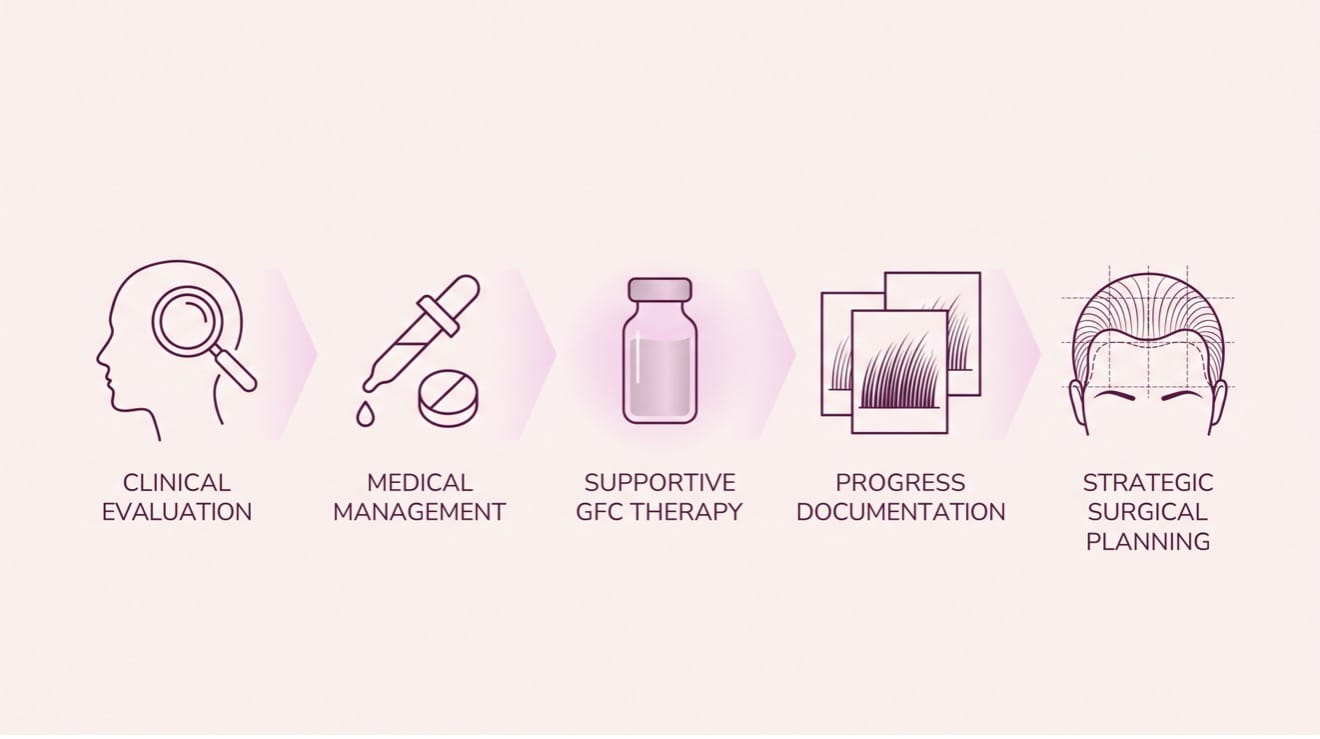
When I examine your scalp I measure donor density per square centimetre. I assess hair calibre and follicular unit composition. I look for miniaturisation in areas not yet visibly thinning but heading there. I evaluate scalp laxity. I establish your Norwood pattern and estimate where it is going.
These are important questions with technical answers. They tell me what is surgically possible.
They tell me nothing about whether it is a good idea.
Whether a hair transplant is a good idea for a particular person depends on three things no instrument measures. Whether he is ready. Whether he is realistic. Whether he is informed. Those three determine satisfaction more powerfully than graft survival rates, more powerfully than technique, more powerfully than anything I do with my hands in an operating room.
A technically excellent transplant on an unprepared patient produces an unhappy patient. A well planned transplant on a patient who understands exactly what he is buying produces a result he lives with comfortably for decades. The same surgery. A different conversation beforehand.
Can You Actually Take the Time Off
This sounds administrative. It is not.
A hair transplant is a full day procedure, frequently seven to nine hours in the chair. The days afterwards involve visible swelling, scabbing across the recipient area, and a donor region that looks obviously operated on. For ten to fourteen days you will look like a man who has had something done to his head, because you will be.
So I ask in practical terms. Can you take ten days? Is your role client facing? Do you have travel booked? Is there a presentation, a wedding, a family function in the next three weeks?
I ask because I have seen what happens when a patient compresses recovery around a schedule that cannot accommodate it. He is back at the office on day four wearing a cap that rubs against healing grafts. He flies on day six. He attends a function on day eight and stands outside in a Delhi evening with a scalp that should be protected. None of this is catastrophic alone. All of it is avoidable, and all of it slightly degrades a result he has paid a great deal for.
There is also the emotional dimension of that fortnight, which patients consistently underestimate. Transplanted hair sheds at around three to four weeks. This is normal, expected, and it happens to essentially everyone. It is also, without exception, the hardest psychological moment of the process. A man who took two days off and returned to a demanding job has less capacity to absorb that moment than a man who was told clearly it was coming.
The Medical History Nobody Volunteers
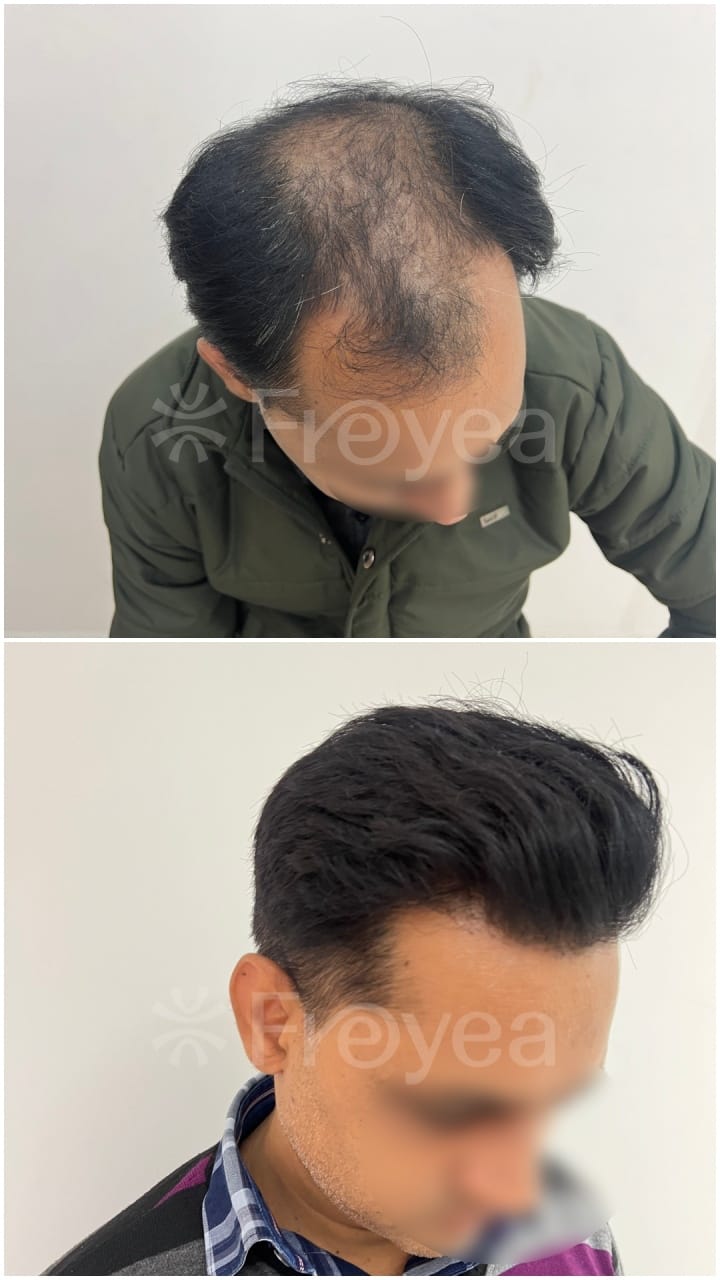
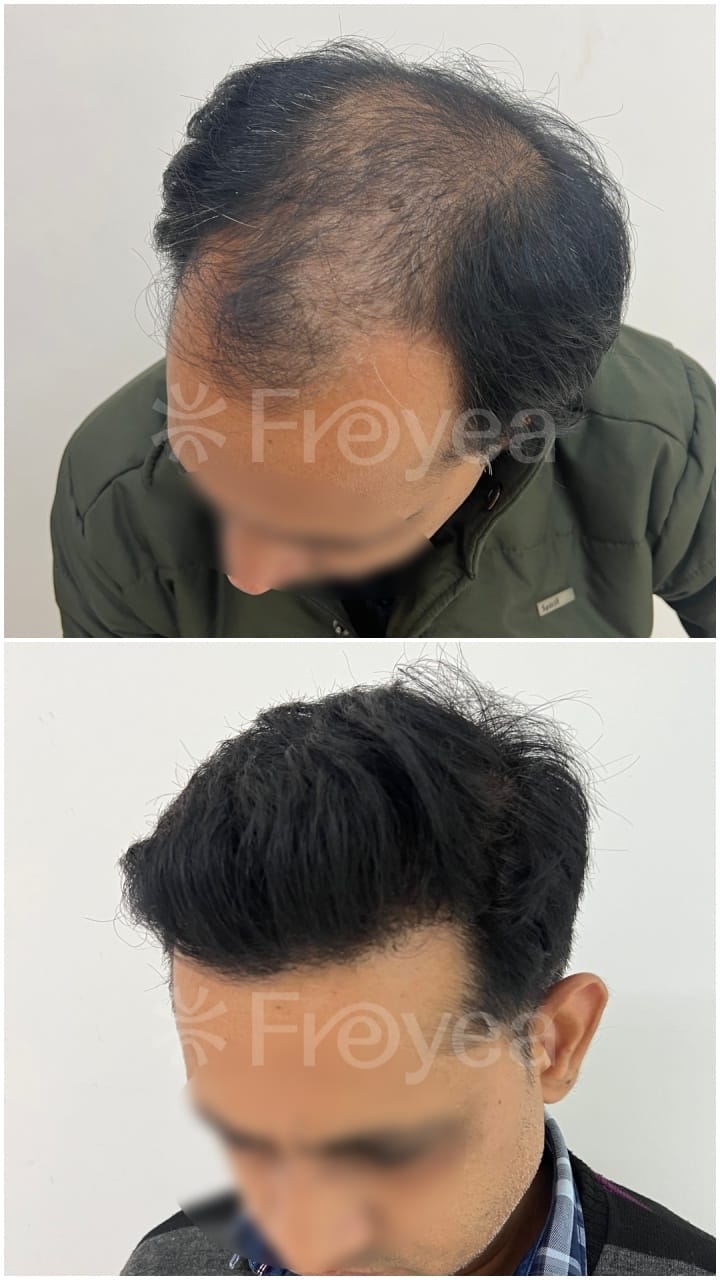
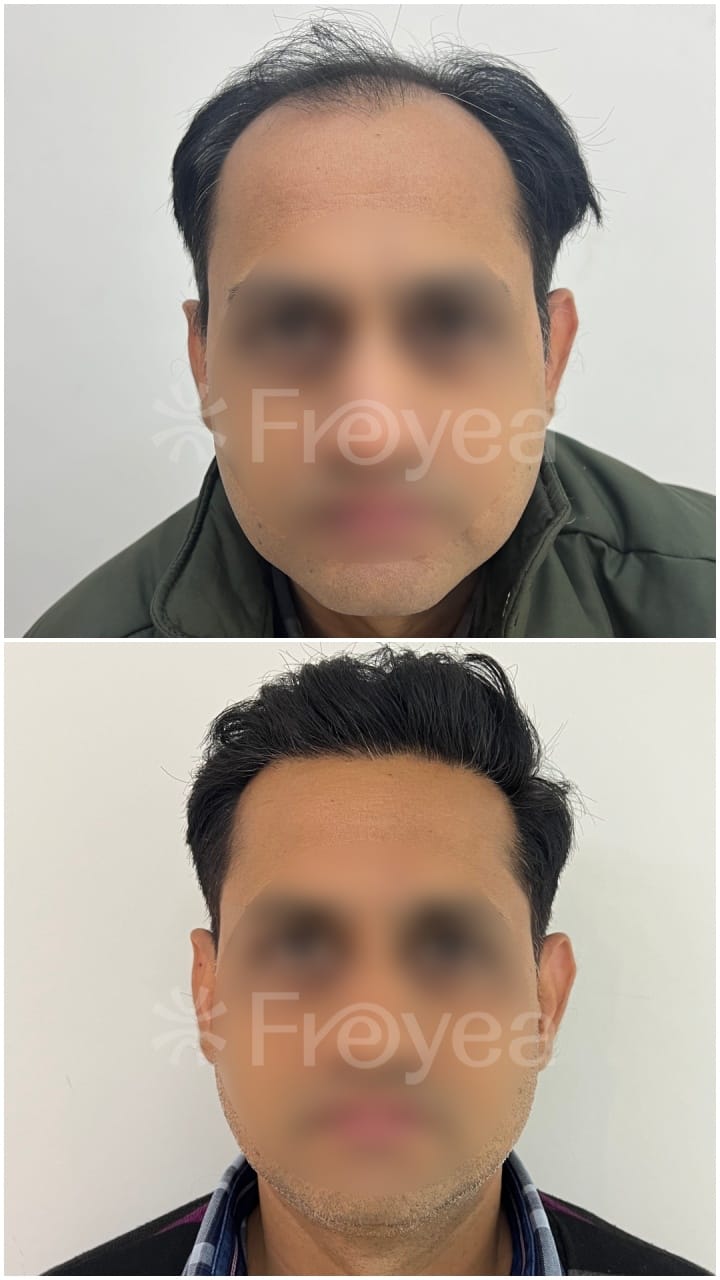
Clinical results: hairline & donor density progression. Tap any image to expand.
I ask about medications, conditions, and previous surgeries specifically rather than generally, because general questions produce general answers.
Blood thinners, including aspirin taken casually for years. Anticoagulants. Diabetes and, if present, how well controlled, because glycaemic control directly affects graft survival and wound healing. Thyroid disorders, which can drive a diffuse hair loss that a transplant will not address. Autoimmune conditions, particularly alopecia areata, where surgery is contraindicated. Cardiac history. Hypertension and what controls it.
Smoking, which I ask about directly and without moralising, because nicotine constricts the microvasculature that newly placed grafts depend on entirely for survival. A patient who continues smoking through the perioperative period is measurably reducing his own yield.
Previous scalp surgery or trauma, which alters local blood supply. Any prior transplant, including one performed elsewhere that he may be reluctant to mention. I have had patients withhold a previous procedure out of embarrassment, which is entirely understandable and also makes my planning considerably harder.
And supplements, which almost nobody mentions unprompted because people do not classify them as medication. Several common ones affect bleeding.
Why Today, and Not Two Years Ago
This is the question I have come to value most, and the one patients are least prepared for.
The hair loss did not begin this month. In most cases it has been progressing for years. So something specific brought this man into my consultation room on this particular Tuesday, and what that something is tells me a great deal.
Sometimes the answer is simple and entirely healthy. He has been considering it for three years, he finally has the time and the money, and he researched it and decided. That is a man making a considered decision on his own timeline.
Sometimes the answer is a photograph. He saw himself in a group picture from a recent function, from an angle he does not usually see, and something landed. This is very common and not a problem in itself, but it is worth examining, because a decision made in the twenty four hours after a bad photograph is a decision made in a particular emotional state.
Sometimes it is a relationship that ended. A comment from a colleague. A new role. Turning forty.
None of these disqualifies anyone. But they matter, because they indicate whether the motivation is coming from inside the patient or from outside him. Patients whose motivation is internal, who are doing this against their own standards, tend to report durable satisfaction. Patients whose motivation is external, who are doing it to change how a specific other person sees them or to fix a situation that hair was not actually causing, tend to report satisfaction that decays.
When I sense the second pattern I do not refuse. I slow down. I suggest we meet again in a few weeks. Almost always, the man who returns is making a clearer decision than the man who first sat down.
What Have You Already Tried
This serves two purposes.
The first is clinical. If you have been on finasteride for two years, that changes my reading of your current pattern, because I am looking at a scalp being medically held rather than one progressing naturally. If you have taken nothing, your pattern is unmodified and likely still moving. If you tried minoxidil for six weeks and stopped, that tells me about the loss and also something about how you engage with sustained protocols, which matters for post-operative compliance.
The second purpose is expectation. A man who has tried nothing sometimes arrives believing a transplant is a complete solution, a single event that ends the problem permanently. It is not. It relocates permanent follicles into areas that need them. It does nothing whatsoever to protect the native hair that remains, which will continue thinning on its own schedule unless medically stabilised.
A transplant without a medical plan alongside it is a temporary improvement on a moving background. Within five years the transplanted zone stands intact while everything behind it recedes, and the result starts to look like an island. I want to know, before we plan anything, whether this patient is prepared to commit to long term medical management, because if he is not, the surgical plan has to be built conservatively around that.
What Does the Ideal Outcome Look Like
This is the question I care about most, and I ask it deliberately.
I do not ask it in grafts. I do not ask where he wants the hairline. I ask what the ideal outcome looks like in his own mind, and then I stay quiet long enough for him to actually think about it.
The answers vary enormously and they are always revealing.
Some men say they want to stop noticing it. To get ready in the morning without the daily assessment, the angle check, the small recalculation about lighting. That is realistic and achievable, and a man who says it is usually an excellent candidate.
Some say they want to look like they did at twenty two. That is a gentle conversation, because I cannot return anyone to twenty two, and a hairline designed for twenty two on a face that is now thirty eight looks wrong in a way that is hard to articulate and immediately visible.
Some name a specific actor. That is the same conversation I have in rhinoplasty consultations: features do not transfer between faces. A hairline has to relate to the shape of your skull, the height of your forehead, the width of your temples, and how your face is likely to change over the next twenty years.
And occasionally a man says something that reveals the hair is standing in for something else. That a relationship will improve, a career will change, a general unhappiness will lift. When I hear that I slow the process considerably, because a hair transplant cannot carry that weight, and the man who expects it to will be disappointed by a perfectly good result.
Ready, Realistic, Informed
By the end of those twenty minutes I usually know which of the three is missing, if any is.
Ready means the timing works. Recovery fits his life, the finances are settled rather than strained, and the decision has been sitting with him long enough to have stabilised.
Realistic means his expectations correspond to what this surgery can deliver on his particular anatomy. He understands donor supply is finite. He understands density will improve substantially but will not match what he had at twenty. He understands the timeline, including the shed at one month and the fact that meaningful growth begins around four months and continues to twelve or fifteen.
Informed means he knows what he is agreeing to. The risks, which are modest but real. The need for ongoing medical therapy. The possibility of a second session years later. What happens if his loss progresses faster than expected.
When all three are present the surgery tends to go well and the patient tends to be satisfied, sometimes for decades. When one is missing I work on it before we schedule anything. That might mean a second consultation, a few months of medical therapy first, or occasionally a frank conversation about whether this is the right year.
Then We Look at the Scalp
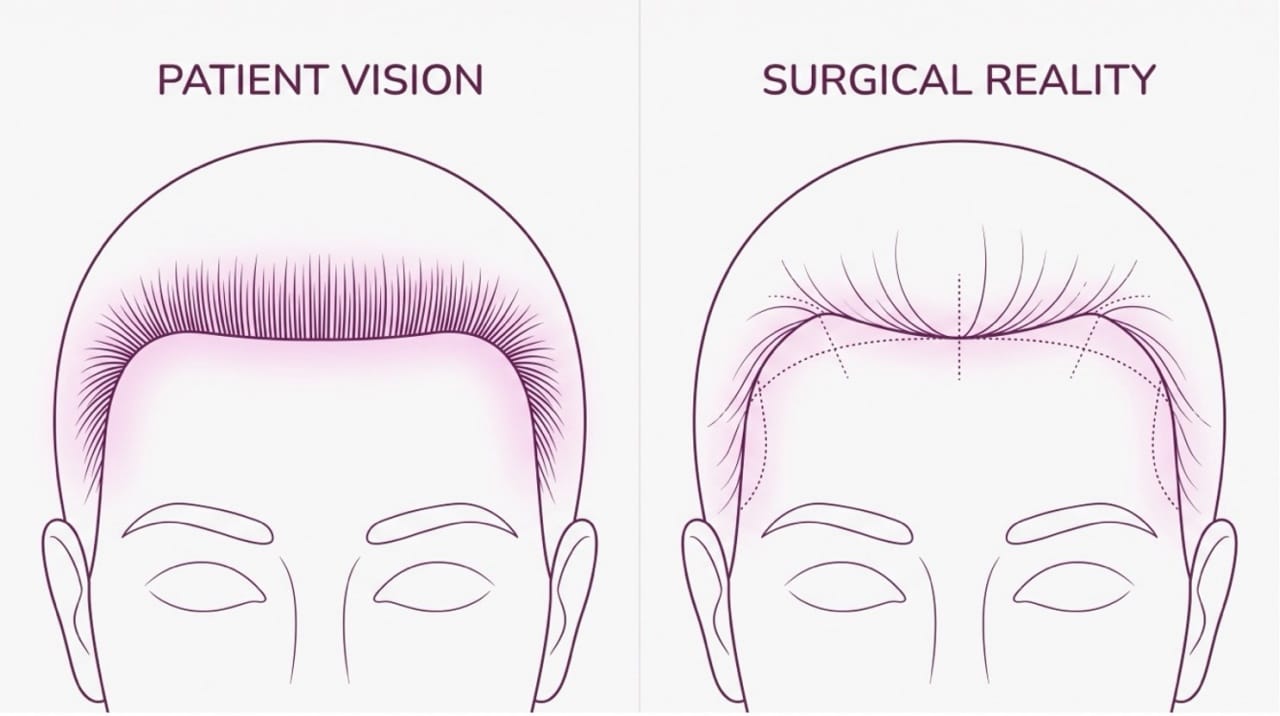
Only after all of that do I pick up the trichoscope.
And by then the examination is a different activity, because I am no longer only measuring a scalp. I am measuring it against a specific person's life, work, expectations, timeline, and definition of a good outcome. The same donor density means different things for a thirty year old in a client facing role who wants to stop noticing his hairline, and for a forty six year old who has been thinking about this for a decade and wants modest, durable coverage.
The numbers are identical. The plan is not.
A hair transplant is not a hair decision. It is a life decision that happens to involve hair, and it will sit on a man's head every day for the rest of his life, through every photograph and every mirror and every morning. A consultation that treats it as a transaction, going straight to the scalp and straight to a quote, has skipped the part that determines whether he will be glad he did it.
Twenty minutes is not long to spend on that. I have never once regretted spending it.
What to Bring to a Consultation
If you are booking a hair transplant consultation anywhere in Delhi, a few practical things will make the appointment considerably more useful.
Bring a current list of medications and supplements, including anything taken occasionally. Bring photographs of yourself from five and ten years ago, which help me establish the rate of progression rather than just the current state. If you have family photographs showing your father, uncles, or maternal grandfather, those are genuinely informative, since pattern inheritance is a real predictive signal.
Bring any previous prescriptions or treatment records, including from clinics you did not continue with. And bring your actual schedule for the next three months, because the timing conversation is real rather than a formality.
You do not need to arrive with a graft number in mind. That is my job, and it is one I would rather do after I understand what you are actually asking for.
Where We Are
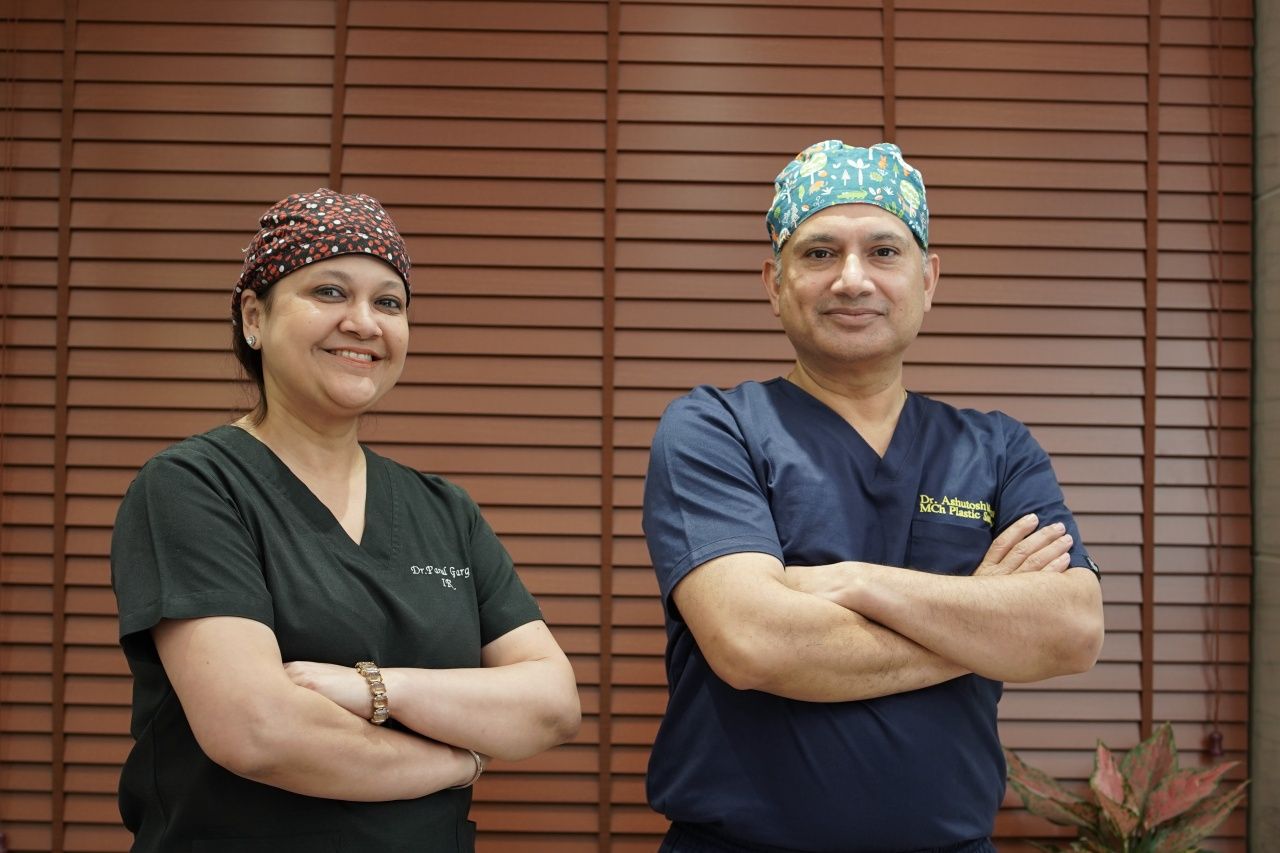
Our clinic is in East of Kailash in South Delhi, a short distance from Kailash Colony metro on the Violet Line, and straightforward to reach from Greater Kailash I and II, Defence Colony, Lajpat Nagar, CR Park, Kalkaji, Jangpura, Nehru Place, and Sarita Vihar.
Consultations run longer than most. If you are coming from an office in the Nehru Place or Okhla corridor, allow more time than you think you need, because the twenty minutes described in this piece are the beginning rather than the whole of it.
Freyea Aesthetics
F-46, East of Kailash
New Delhi 110065, India
Dr. Ashutosh Misra, MCh (Plastic & Reconstructive Surgery), MS, MBBS
freyea.com